
Weeknight Tomato Basil Pasta: A Clear, Practical Guide
A simple, reliable weeknight pasta you can throw together in under 30 minutes with pantry staples and fresh basil for vibrant flavor.
On this page
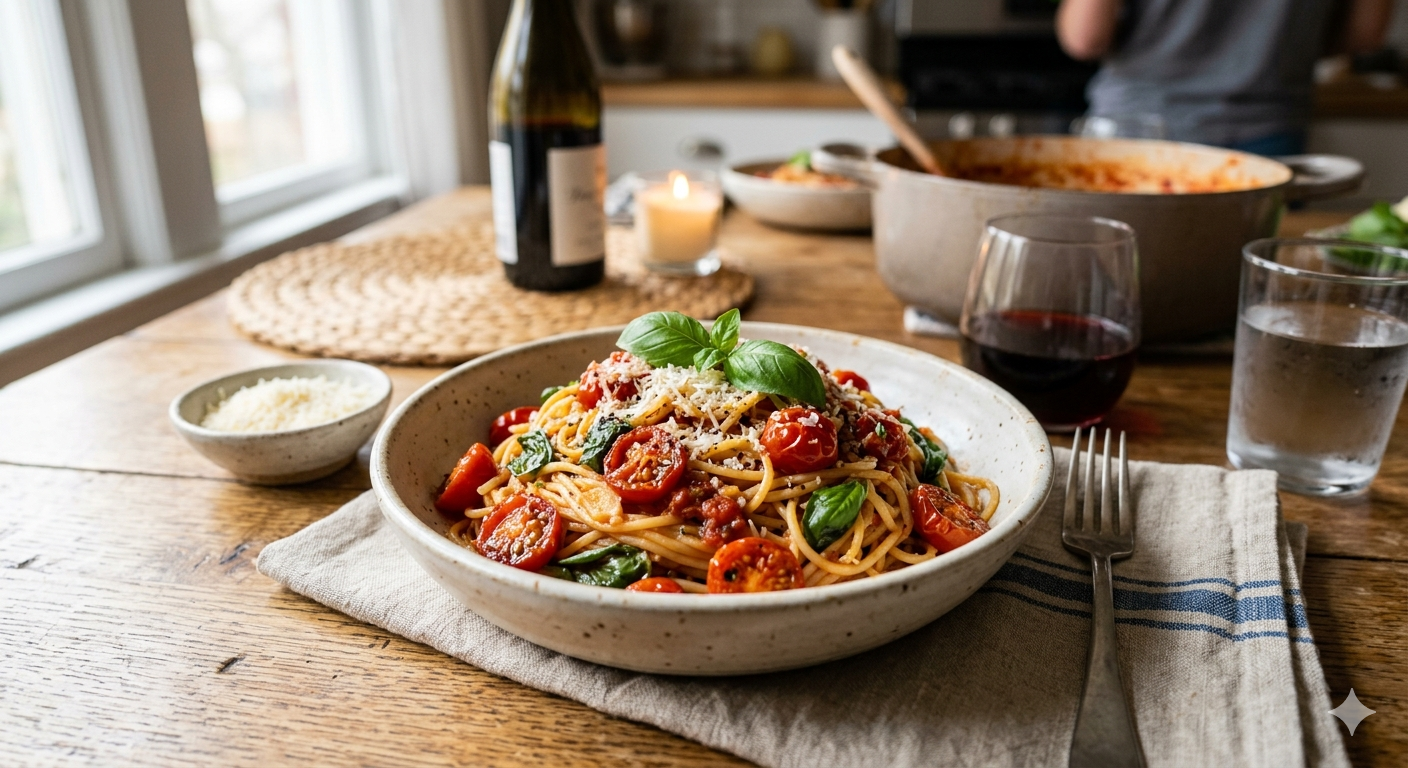
When the clock is ticking and you want something comforting but reliable, a quick tomato basil pasta is hard to beat. This dish uses a few pantry staples, fresh basil, and a splash of tomato sauce to deliver big flavor without fuss. The goal here is clarity: you’ll see exactly how the pieces come together, with practical tips that work in real kitchens.
Whether you’re cooking for one or feeding a family, you’ll learn how to time the sauce and pasta so they finish together, how to season well, and how to adapt the recipe to what you have on hand.
Ingredients
- 12 oz (340 g) pasta such as spaghetti or linguine
- 2 tablespoons olive oil
- 3 garlic cloves, finely minced
- 1 can (28 oz) crushed tomatoes or 2 cups tomato passata
- 1/2 teaspoon salt, plus more to taste
- 1/4 teaspoon freshly ground black pepper
- Pinch of red pepper flakes (optional)
- A handful of fresh basil leaves, torn
- 1/3 to 1/2 cup grated parmesan or pecorino, plus extra for serving
- Optional greens: a small handful of spinach or arugula
Notes on ingredients: Crushed tomatoes give a bright tomato flavor with body, but you can use tomato passata for a smoother sauce. If you’re avoiding dairy, you can finish the dish with a touch of olive oil and nutritional yeast instead of cheese. Fresh basil is best added at the end to preserve its aroma. If you like extra heat, keep the red pepper flakes; if you prefer milder flavor, skip them altogether.
Tools and Prep
Prep is the quiet secret to a successful weeknight pasta. Have everything measured, minced, and ready to go before you start cooking.
- Large pot for boiling pasta, filled with salted water (about 4–6 quarts water per 12 oz pasta).
- Wide skillet or sauté pan for the sauce; a pan with high sides helps when adding pasta and water.
- Colander for draining pasta; a small ladle or measuring cup to reserve pasta water.
- Fresh basil torn into pieces just before adding to the sauce; grated cheese for serving.
Practical tips: aim for a rolling boil with enough water to give the pasta room to move. Salt the water generously—this is your chance to season the pasta itself. Have garlic already minced, the tomatoes opened, and cheese grated so you can focus on the technique once cooking starts.
Method
- Bring a large pot of salted water to a rolling boil. Add the pasta and cook until al dente according to package directions, usually a minute or two less than the timer suggests for best texture. Before draining, scoop out 1 cup of the starchy cooking water.
- While the pasta cooks, heat the olive oil in a wide skillet over medium heat. Add the minced garlic and red pepper flakes (if using). Sauté for 30 to 60 seconds, just until the garlic is fragrant and starting to color—watch closely to avoid burning.
- Pour in the crushed tomatoes or passata. Bring to a gentle simmer and cook for 6 to 8 minutes, stirring occasionally. Season with salt and pepper. If the sauce tastes flat, a small pinch more salt or a splash of pasta water will help.
- When the pasta is nearly done, stir 2 to 4 tablespoons of the reserved pasta water into the sauce to loosen it and help it cling to the pasta.
- Drain the pasta and add it to the skillet with the sauce. Toss well to coat. Add more pasta water a little at a time if the sauce seems thick or you want a silkier coating.
- Turn off the heat. Stir in the torn basil and the grated cheese. Taste and adjust seasoning. If you’re using greens, add them now and toss until just wilted.
- Serve immediately with extra cheese on the side and a drizzle of olive oil if desired.
Variations and Substitutions
The beauty of this dish is how adaptable it is. Here are practical variations you can try without complicating the process:
- Protein boost: Add grilled chicken strips, sautéed shrimp, or chickpeas for plant-based protein. Reheat briefly in the sauce so everything warms together.
- Tomato options: Use a mix of crushed tomatoes and a spoon of tomato paste for deeper color and richness. For a brighter style, keep the sauce simple with passata and fresh herbs.
- Greens and herbs: Spinach, arugula, or wilted kale can be stirred in at the end for color and nutrition.
- Cheese and dairy: If you like a creamier finish, whisk in a tablespoon of cream or a splash of half-and-half just off the heat. For a vegan option, skip the cheese or use nutritional yeast.
- Gluten-free or alternative pasta: Sub with gluten-free pasta or any shape you prefer. The technique stays the same; cooking times will adjust on the package.
Common Pitfalls and Fixes
Even small missteps can throw off a weeknight dinner. Here are practical fixes:
- Sauce tastes flat: salt gradually and taste as you go. A tiny pinch of sugar can balance acidity if your tomatoes are very acidic.
- Too thick or gluey sauce: add reserved pasta water a little at a time until you reach a silky coating. Do not over-reduce the sauce; finish with pasta in the pan to combine.
- Garlic burns: lower the heat slightly and watch closely; burnt garlic will taste bitter and ruin the sauce.
- Pasta overcooks while you wait: start checking a couple of minutes before the package says. Pull it a touch before al dente if your sauce is ready early.
Make-Ahead, Storage, and Reheating
This dish is best enjoyed fresh, but you can plan ahead and store components for a quicker repeat dinner.
- Sauce: Make the sauce up to a day ahead and refrigerate. Reheat gently, adding a splash of water or stock to loosen if needed, then finish with fresh basil and cheese when you reheat.
- Pasta: Cook pasta al dente, drain, cool briefly under running water to stop cooking, and store separately from the sauce. Reheat by warming the sauce and tossing with hot pasta to finish in the pan.
- Freezer note: Tomato-based sauces freeze well. Reheat on the stove or in a microwave, then add fresh basil and cheese after reheating for a bright finish.
Conclusion
With a handful of pantry staples, a few fresh ingredients, and a straightforward technique, weeknight tomato basil pasta proves that you don’t need a long list of ingredients to create something satisfying and delicious. Focus on timing, taste as you go, and be prepared to adapt to what’s in your fridge. This recipe is a reliable backbone you can tweak to your mood, your pantry, and your family’s preferences, day after day.
Next in the journal
Jump to the next read without returning to the archive.