
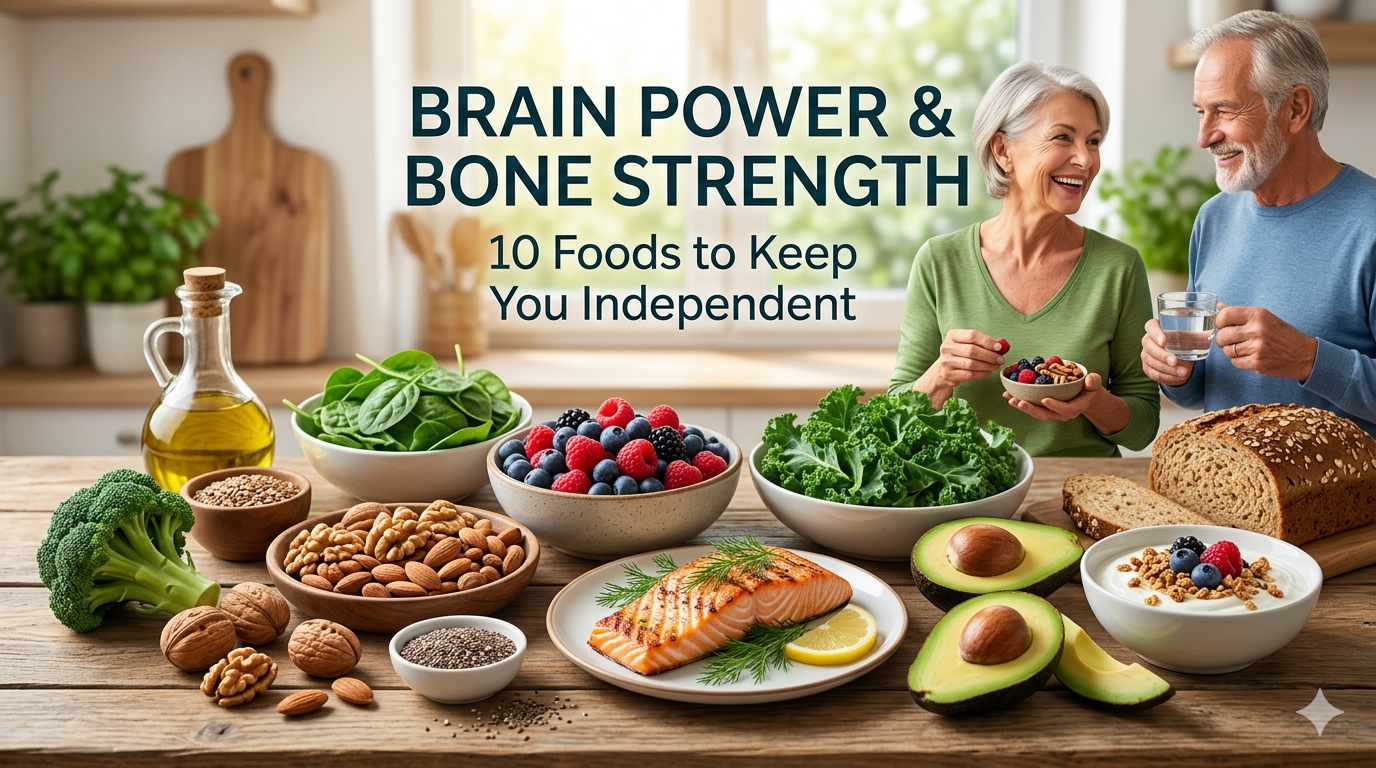
Brain Power & Bone Strength: 10 Foods to Keep You Independent
Start with 10 pantry-friendly foods that support thinking and bone health—each entry includes the kitchen portion or swap that actually makes a difference.
On this page
Direct answer: the 10 foods and what to do with them
If you want fewer aches, steadier balance, and a clearer head for daily tasks, prioritize these ten foods at least a few times each week. Below each item is a concrete kitchen habit—how to buy, how to eat it, or a simple portion target—so the food actually helps instead of languishing in the fridge.
- Wild or canned salmon — Aim for two 3–4 oz servings weekly; use canned salmon on toast, in salads, or folded into scrambled eggs for an easy omega-3 and calcium boost.
- Plain Greek yogurt — A ¾-cup serving is a high-protein snack; stir in fruit and a spoonful of ground flaxseed to pair fat and aid vitamin absorption.
- Canned sardines (in olive oil) — One serving (one small can) gives calcium and vitamin D with minimal prep; mash with mustard and lemon for a quick sandwich spread.
- Frozen berries — Two handfuls per day in oatmeal or smoothies; frozen fruit keeps longer and preserves brain-friendly polyphenols.
- Leafy greens (kale, spinach, chard) — One to two cups cooked or a large salad daily supplies vitamin K and magnesium; quick-sauté with garlic to reduce volume and heat-tenderize for absorption.
- Eggs — One whole egg per day is a convenient source of B12 and choline; poach or hard-boil for fast breakfasts or grain bowls.
- Beans and lentils — ½ to 1 cup cooked per meal provides protein, magnesium, and potassium; keep canned beans on hand for fast dinners like Tomato Butter Beans on Toast with Garlic and Lemon.
- Walnuts — A quarter-cup handful as a salad topping or snack for plant-based omega-3s and healthy calories.
- Fortified milk or plant milk — One cup daily gives vitamin D and calcium where sunlight and dietary sources lag; use in soups, cereals, and smoothies.
- Orange vegetables (sweet potato, carrots) — One medium sweet potato or a cup of carrots delivers beta-carotene and supportive micronutrients; roast with olive oil for a bone-friendly side.
Already want a starting plan? Try canned salmon on toast for breakfast and a bean-based dinner twice this week—both are low-lift swaps that land multiple nutrients. Read on to understand why these choices matter and the common kitchen mistakes that blunt their benefit.
Related reading: Browse quick context in our Food Facts archive for nutrient-focused explainers that pair well with these foods.
Keep reading
More from Food Facts, selected to keep the flow going.
Peeling and Seeding Tomatoes: When It’s Worth the Work (and When to Skip It)
If your sauce turns watery or your salsa becomes runny, remove skins and seeds: blanch 15–30 seconds and strain the gel to keep texture and concentrate flavor.

Eat for Youthful Skin and Energy: 10 Foods to Add to Your Kitchen Now
Start with three weekly swaps—salmon, spinach, and blueberries—to boost protein, omega‑3s, and vitamin C; here’s the practical list plus simple kitchen tips.

Should You Refrigerate Bananas? Why the Peel Goes Brown and When It’s Worth It
Refrigerating ripe bananas darkens the peel but slows interior softening—learn when brown skins are cosmetic, how cold damages peel cells, and exact storage moves that work.
Next in the journal
Jump to the next read without returning to the archive.