
How to Store Fresh Herbs So They Last Longer
A clear guide to storing fresh herbs by texture, with simple fridge methods, moisture control, and ideas for using herbs before they fade.
A clear guide to storing fresh herbs by texture, with simple fridge methods, moisture control, and ideas for using herbs before they fade.
This guide complements the wider kuchniatwist recipe collection and the broader guides archive.
At a glance
- Soft herbs need gentle moisture and protection from cold airflow.
- Woody herbs last better when wrapped loosely and kept dry enough.
- Herbs should be checked before storage so damaged stems do not spoil the bunch.
- Freezing works best when the herbs are destined for cooked dishes, not fresh garnish.
What this guide helps with
This guide is built for practical searches, not vague inspiration. It connects the main topic to ordinary kitchen decisions: what to choose, what to prepare first, and what to notice while cooking.
If you want to use it quickly, scan the subheadings first and come back to the relevant section when you are shopping, planning a meal, or comparing ingredients at home.
Separate soft and woody herbs
Parsley, cilantro, dill, basil, and mint behave differently from rosemary, thyme, and sage. Soft herbs bruise easily and lose freshness fast. Woody herbs tolerate drier storage and usually need less fuss to stay usable. Sorting them first prevents one bad storage method from ruining the whole shop, especially when several herbs come home in the same bag.
Remove damaged leaves first
Before storing herbs, open the bunch and remove slimy, yellow, or crushed pieces. One damaged section can spread moisture through the package. This small step often adds more life than any special container. It also gives you a chance to trim dry stem ends, shake away excess water, and decide which leaves should be used first.
Use the jar method for soft herbs
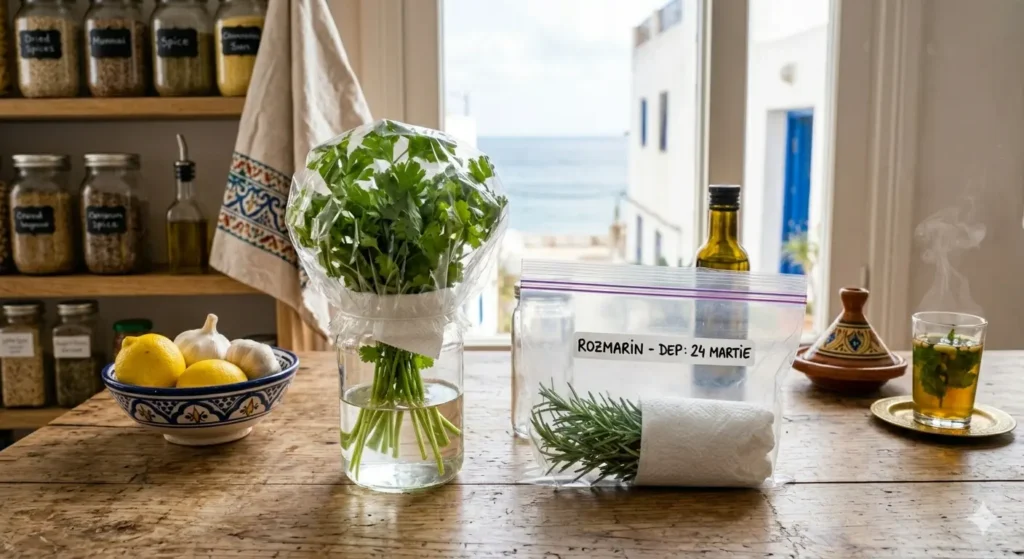
Trim the stems and place soft herbs in a jar with a little water, like a small bouquet. Cover loosely with a bag and refrigerate most herbs. Basil is the exception for many kitchens because it can darken in the cold. Keep the leaves above the water line and change the water when it clouds, otherwise the lower stems can soften and smell stale.
Wrap woody herbs loosely
Rosemary, thyme, and sage usually prefer a barely damp paper towel inside a loose bag or container. Too much water makes them mold faster, while a completely open fridge drawer can dry them out. The goal is light humidity, not wetness, so the paper towel should feel cool and flexible rather than soaked.
Use fading herbs before they are wasted
Herbs that are losing freshness can still become sauces, dressings, omelets, soups, rice dishes, or marinades. If they smell clean and look safe, use them in cooked food before they become too tired for garnish. Chop them into yogurt, blend them with oil and lemon, or stir them into hot grains where perfect leaf shape no longer matters.
Frequently asked questions
Can I freeze fresh herbs?
Yes, but frozen herbs are best for cooked dishes. They usually lose the bright texture needed for salads or final garnish.
Why do herbs get slimy in the fridge?
Too much trapped moisture is the usual reason. Remove damaged leaves and avoid sealing wet herbs in a tight bag.
How often should I change the water in a herb jar?
Change it every couple of days or whenever it looks cloudy. Trim stems again if they look tired, and remove any leaves touching the water because they break down quickly. A clean jar and fresh stem ends make the bouquet method work much better for everyday cooking at home.
What to apply first
If you want to put this guide to work quickly, begin with two simple moves: Soft herbs need gentle moisture and protection from cold airflow. Woody herbs last better when wrapped loosely and kept dry enough. That keeps the article practical instead of letting it sit as theory only.