
Mushroom Barley Stew
A mushroom barley stew with carrots, thyme, and a deep broth, made for cool days when you want comfort without a heavy sauce.
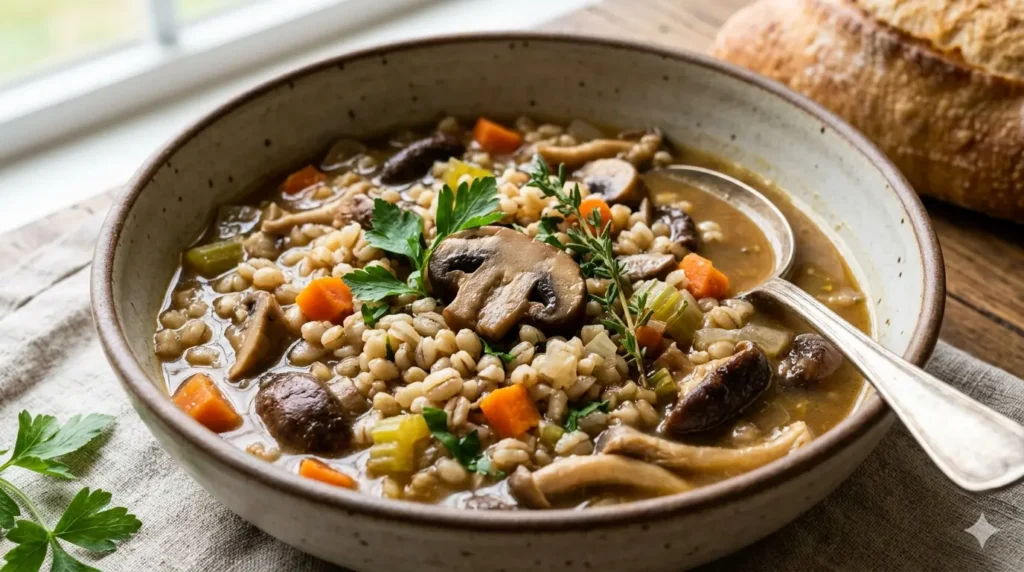
Barley gives this stew a satisfying chew and mushrooms bring depth without needing meat. The key is browning the mushrooms first, then letting the barley simmer until the broth turns slightly silky.
This recipe lives in Seasonal Cooking and is written for home cooking, with clear steps and realistic ingredient guidance.
Why this recipe works
This recipe is written for ordinary home kitchens, with clear steps and enough context to help readers understand the timing, texture, and small decisions that shape the final result.
The goal is repeatability. Readers should be able to cook it once, learn what matters, and come back later with confidence instead of guessing their way through the process.
Quick snapshot
Ingredients
- 300 g mushrooms, sliced
- 160 g pearl barley
- 1 onion, diced
- 2 carrots, diced
- 2 celery sticks, diced
- 2 tbsp olive oil
- 2 garlic cloves, minced
- 1 tsp thyme
- 1.2 l vegetable stock
- 1 tbsp soy sauce
- 1 tbsp parsley
- black pepper
Method
- Brown mushrooms in olive oil in a wide pot, letting their moisture cook off before stirring too much.
- Add onion, carrots, celery, garlic, thyme, and black pepper, cooking until the onion softens.
- Stir in barley, stock, and soy sauce.
- Simmer for 40 to 45 minutes, until the barley is tender and the broth is slightly thickened.
- Adjust salt, add parsley, and rest the stew for 5 minutes before serving.
Key ingredients and adjustments
The key ingredients are the ones that give the dish structure, flavor, and rhythm. Preparing them in advance usually makes the cooking process smoother and the final texture more reliable.
If you want to adapt the recipe, change one variable at a time. That keeps it clear whether a new fat, protein, garnish, or seasoning actually improved the result.
Before you start
Read the recipe once before you start and prep the ingredients in advance so you can cook without unnecessary pauses between the important steps.
Adjust heat and seasoning gradually. In home cooking, small corrections made at the right time are usually more useful than one large correction at the end.
Success notes
Mushrooms need space and patience at the start. If they steam instead of brown, the stew will still work, but it will miss the savory base that makes the broth taste full.
Use the notes in the recipe as checkpoints, then adjust heat, liquid, or seasoning in small steps. Small corrections usually do more for the final result than one dramatic change.
Common mistakes
- Leaving garlic over high heat for too long can turn it bitter and shift the whole flavor profile.
- Seasoning only at the very end often leads to a dish that is technically finished but flatter than it should be.
Serving ideas
Serve the dish at the moment its texture is at its best and pair it with something simple that keeps the meal balanced. The suggested related recipes and guides are there to help readers turn one page into a fuller menu.
Storage
Cool the dish promptly, store it in a clean sealed container, and adapt the storage temperature to the main ingredients. When in doubt, chill faster and use it sooner rather than stretching the timeline.
Frequently asked questions
Can I make part of this recipe ahead of time?
Usually yes. Ingredient prep, partial cooking, or a controlled rest can often be done in advance, as long as the final texture-sensitive steps are saved for the right moment.
How do I keep the texture from going wrong?
Watch heat, moisture, and timing more closely than the clock alone. Most texture problems come from rushing, using too much dry ingredient too early, or skipping small adjustments during cooking.
How should I store leftovers?
Cool the food safely, store it in a sealed container, and reheat only what you plan to eat. The exact storage window depends on the ingredients and how the dish was handled after cooking.
Note: always check allergens and adapt the recipe to your ingredients and needs.