
Silky Milk Cake — a Tender Milk-Soaked Sponge
A single-bowl butter sponge baked until golden, then saturated with a warm sweet milk soak for a silky, tender finish. Fast to make, irresistible to slice.
On this page
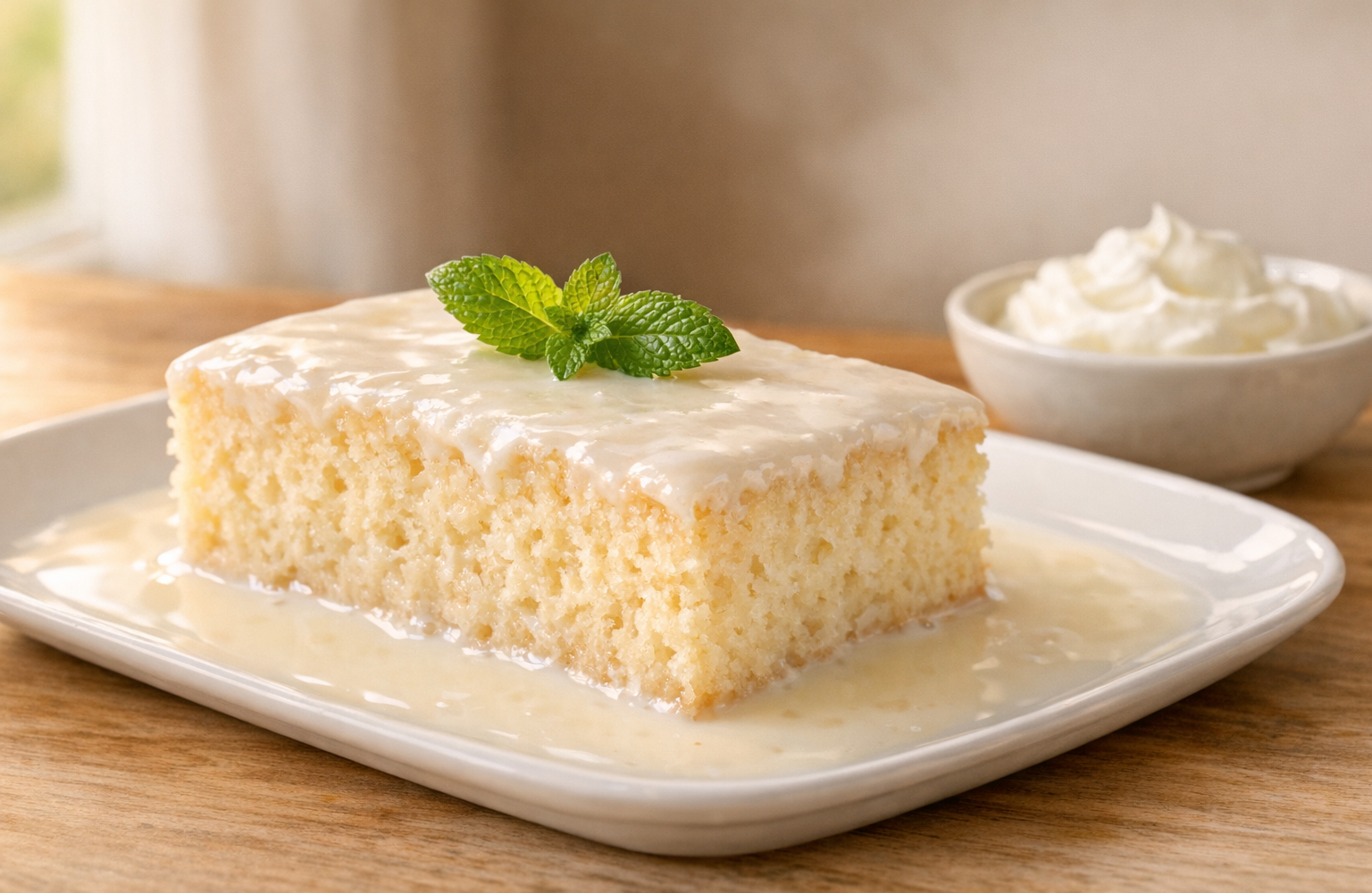
Start with room-temperature eggs and butter so the batter emulsifies quickly; the cake bakes to a pale gold and takes the milk soak without collapsing. This version uses a single bowl and a warm milk mixture poured over a hot cake for an even, silky crumb.
The texture is tender, not dense — slice after the soak has settled for even syrup distribution and clean edges.
Why this recipe works
A high-ratio butter sponge gives structure so the cake holds liquid without turning mushy. Warm milk opens the crumb so the soak absorbs evenly; tempered condensed milk adds body and sheen without extra stirring.
- Room-temperature ingredients combine smoothly and trap even air in the batter.
- A modest bake time prevents over-browning while developing a thin crust that helps the milk absorb from the top down.
- The soak is warm but not boiling — that avoids shocking the cake and keeps the crumb intact.
Ingredient notes
- Use whole milk for the soak; swap evaporated milk for part of the milk for a richer finish. Condensed milk is optional but gives a glossy, slightly caramelized sweetness.
- All-purpose flour provides the right bite; avoid cake flour unless you reduce the bake time slightly.
- Unsalted butter lets you control seasoning — add a pinch more salt if your butter is very low in salt.
- Want variations? Fold in 1 tsp lemon zest or 1/2 tsp ground cardamom to the batter for a bright lift.
How to make it
- Whisk butter and sugar until pale, beat in eggs one at a time, then fold in dry ingredients alternately with milk for a smooth, slightly thick batter.
- Bake until a toothpick comes out with a few moist crumbs; while the cake is hot, prick the surface lightly and pour the warm milk mixture slowly so it soaks evenly.
- Cool on a rack until the soak settles, then chill for at least 30 minutes to firm the slices before cutting.
Serving and storage
Serve slightly chilled or at cool room temperature with a dollop of lightly whipped cream or a scattering of toasted nuts for contrast. The texture is best after a short rest in the fridge, which helps slices hold their shape.
Tip: If you need faster cooling, transfer the pan briefly to the refrigerator once the cake has stopped steaming — that speeds setting without drying the surface.
Explore more recipes and kitchen tips in our Recipes archive, read a longer food feature in Food Stories, or learn about the people behind this publication on our About page.
Keep reading across the journal: Recipes, Why Onions Need More Time Than Most Recipes Admit, What Tomato Paste Actually Does in a Pan.
Ingredients
- 1 cup (225 g) unsalted butter, softened
- 1 cup (200 g) granulated sugar
- 4 large eggs, room temperature
- 1 teaspoon vanilla extract
- 2 cups (250 g) all-purpose flour
- 2 teaspoons baking powder
- 1/2 teaspoon fine salt
- 3/4 cup (180 ml) whole milk, room temperature
- Milk soak — 1 can (14 oz / 400 g) sweetened condensed milk
- Milk soak — 1 cup (240 ml) whole milk
- Milk soak — 1/4 cup (60 ml) heavy cream or evaporated milk (optional for extra richness)
- Finishing — powdered sugar or lightly whipped cream to serve
- Optional — 1 teaspoon lemon zest or 1/2 teaspoon ground cardamom
Method
- Preheat the oven to 350°F (175°C). Grease and line a 9x13-inch (23x33 cm) baking pan with parchment, leaving an overhang for easy removal.
- In a large bowl, beat the softened butter and sugar until pale and a little fluffy, about 2–3 minutes with an electric mixer. Add eggs one at a time, beating until each is incorporated, then stir in the vanilla.
- Whisk together the flour, baking powder, and salt in a separate bowl. With the mixer on low, add one-third of the dry mix to the butter mixture, then half of the 3/4 cup milk. Repeat once more, finishing with the remaining dry ingredients and scraping the bowl to form a homogeneous, slightly thick batter. Stir in optional lemon zest or cardamom now, if using.
- Spread the batter evenly in the prepared pan and smooth the top. Bake in the center of the oven until the top is pale golden and a toothpick inserted into the center comes out with a few moist crumbs, 30–35 minutes.
- While the cake bakes, warm the milk soak ingredients in a saucepan over low heat just until the condensed milk blends with the milk and the mixture is warm to the touch — do not boil. Keep warm off the heat.
- When the cake comes out of the oven, use the tip of a skewer or fork to prick the surface at 1/2-inch (1–1.5 cm) intervals. Pour the warm milk mixture slowly and evenly over the hot cake, starting at the center and working outward; allow it to sink in for 10–15 minutes.
- Let the cake cool to room temperature on a rack, then chill it in the refrigerator for at least 30 minutes to set the soak before slicing. Dust with powdered sugar or serve with whipped cream just before serving.
- Store any leftovers tightly covered in the refrigerator for up to 3 days. Bring to cool room temperature before serving if you prefer a softer feel.
Keep reading
More from Recipes, selected to keep the flow going.

The “Sunday Best” Slow-Roasted Garlic & Herb Chicken
Slow-roast a 3½–4 lb chicken at 300°F for tender, nearly fall-apart breast meat and roast whole garlic until it’s spreadable—plus the single trick that keeps the skin crisp.

Sauce Tomate That Tastes Slow‑Cooked — in 45 Minutes
Cut through thin, acidic tomato sauce: sweat the onions low and long, toast the tomato paste, then simmer 30–40 minutes for rich, balanced sauce.

Thick, Tall Buttermilk Pancakes: How to Get Perfect Fluff Every Time
Two small technique changes—use buttermilk and mix as little as possible—give tall, tender pancakes with browned edges and a custardy interior in about 25 minutes.
Next in the journal
Jump to the next read without returning to the archive.