
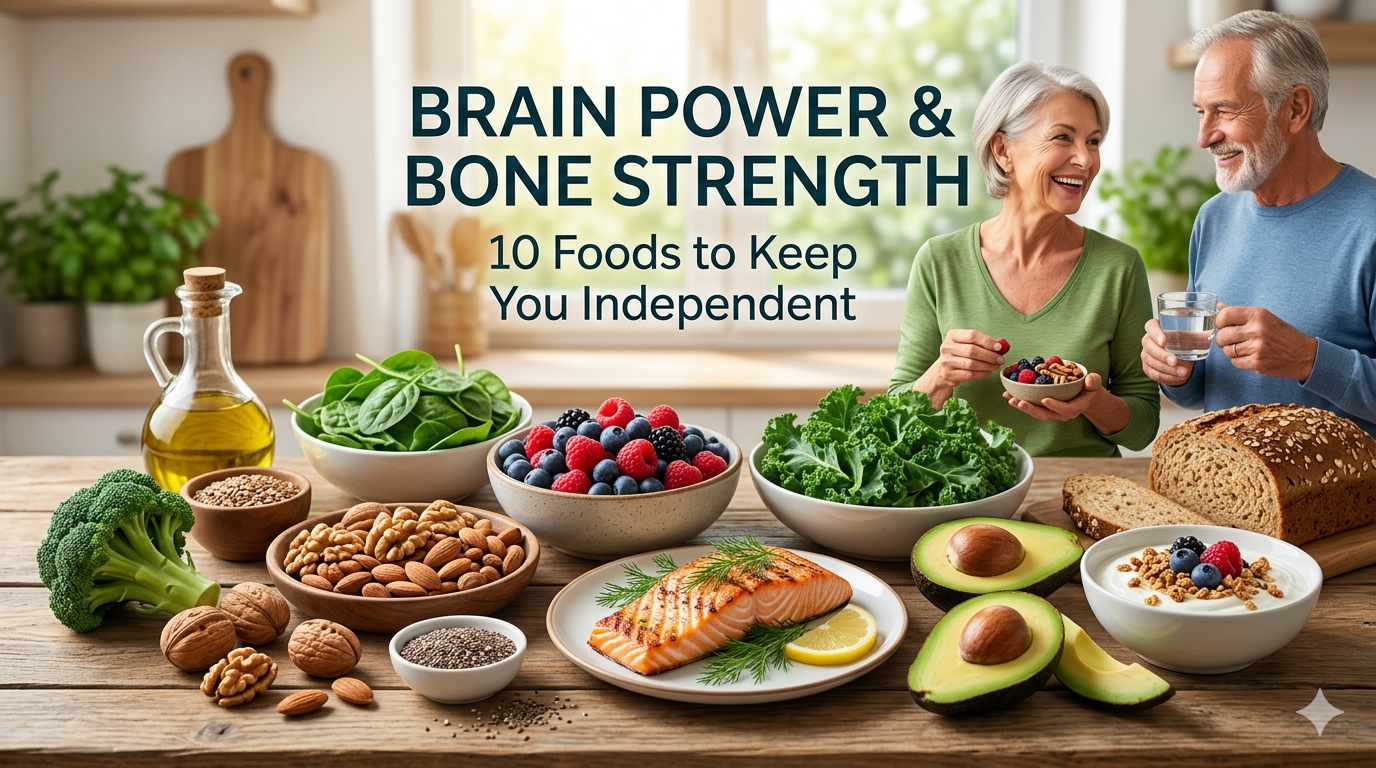
Brain Power & Bone Strength: 10 Foods to Keep You Independent
Start with 10 pantry-friendly foods that support thinking and bone health—each entry includes the kitchen portion or swap that actually makes a difference.
On this page
Practical takeaway: a one-week kitchen plan and smart swaps
Use this compact, low-fuss plan to fold the ten foods into everyday meals. The goal is simple: small, repeatable habits you can keep without specialty stores or extra time.
Mini shopping list (week of basics)
- 2 cans salmon, 3 cans sardines
- Large tub plain Greek yogurt, 1 dozen eggs
- 2 bags frozen berries, 1 bag frozen spinach or chard
- 2 cans mixed beans, walnuts, fortified milk
- 3–4 sweet potatoes, a head of garlic
Simple week plan
- Breakfasts: yogurt + berries + walnuts or 2 eggs + whole-grain toast with canned salmon.
- Lunches: big leafy-green salad with beans and a handful of walnuts; dress with olive oil to aid fat-soluble absorption.
- Dinners: two fish nights (salmon or sardines), two bean-based dinners (try Tomato Butter Beans on Toast), one sheet-pan roasted sweet potato and chicken (see Crispy Sheet-Pan Chicken with Caramelized Onions and Potatoes).
Cooking and storage tips
- Keep frozen berries and greens in the front of the freezer so you’ll use them; they’re cheaper and preserve nutrients well.
- Drain sardines in olive oil into a jar and keep refrigerated for a week—use the oil for dressings to preserve flavor and calories.
- Batch-cook beans and store in single-meal containers; they’re versatile, shelf-stable when canned, and reheat without fuss.
Kitchen shortcuts to save time: roast several sweet potatoes at once, hard-boil eggs in bulk, and keep a jar of lemony tuna or salmon spread on hand for instant snacks. For flavor control and better texture, check our explainer on garlic techniques in Fresh Garlic vs Roasted Garlic: When Each One Wins and learn why slow-caramed onions make a difference in pan-roasted dishes in Why Onions Need More Time Than Most Recipes Admit.
These are kitchen-first steps: pick two swaps to start—salmon for a processed snack and beans for one dinner—and build from there. Small, consistent changes in what you buy and how you plate your meals are far more likely to keep you independent than chasing one “superfood.”
For background on how particular ingredients behave in a pan, see What Tomato Paste Actually Does in a Pan, which helps when you’re building flavor-rich, nutrient-dense meals from simple items.
The short version to remember before you move on.
A compact shopping list, weekly meal plan, and storage-and-cook shortcuts to make the changes stick.
Keep reading
More from Food Facts, selected to keep the flow going.
Peeling and Seeding Tomatoes: When It’s Worth the Work (and When to Skip It)
If your sauce turns watery or your salsa becomes runny, remove skins and seeds: blanch 15–30 seconds and strain the gel to keep texture and concentrate flavor.

Eat for Youthful Skin and Energy: 10 Foods to Add to Your Kitchen Now
Start with three weekly swaps—salmon, spinach, and blueberries—to boost protein, omega‑3s, and vitamin C; here’s the practical list plus simple kitchen tips.

Should You Refrigerate Bananas? Why the Peel Goes Brown and When It’s Worth It
Refrigerating ripe bananas darkens the peel but slows interior softening—learn when brown skins are cosmetic, how cold damages peel cells, and exact storage moves that work.
Next in the journal
Jump to the next read without returning to the archive.