
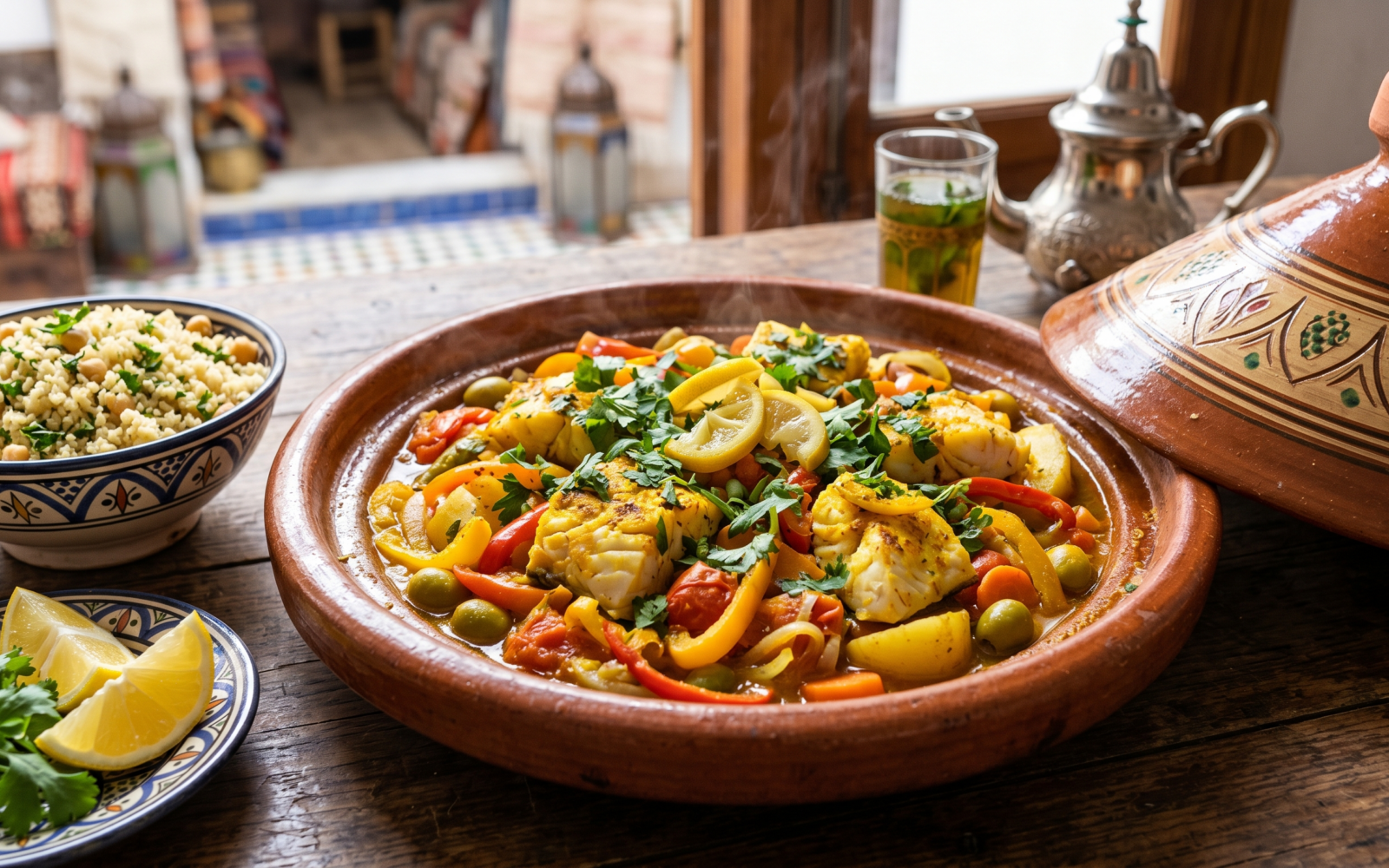
Fast Fish Tagine: Silky Tomato‑Saffron Broth in 50 Minutes
Add the fish at the last 8–10 minutes so it stays moist; this tagine pairs tomato, saffron and preserved lemon into a weeknight‑friendly stew you can finish in under an hour.
On this page
Practical cooking method
The sequence and temperature control are the practical heart of this dish. Below is the staged approach—each short stage has a specific sensory cue to look for so you can reproduce the results consistently.
- 1. Sweat and caramelize the onion (12–15 minutes): Heat 3 tablespoons olive oil over medium in a wide, heavy pan. Add the sliced onion with a pinch of salt and cook, stirring every few minutes, until edges are golden and sugars are showing. This is the base; you should smell sweet, savory notes from the pan.
- 2. Bloom spices and garlic (30–60 seconds): Push the onion to the side, add 1 teaspoon ground cumin and 1 teaspoon smoked paprika; let them bloom in the oil for 30–60 seconds, then add minced garlic and stir until aromatic. Blooming spices releases their essential oils—don’t skip it.
- 3. Add tomato paste and tomatoes (2–4 minutes): Stir in a tablespoon of tomato paste and cook until it darkens slightly; then add a can of crushed tomatoes. Use the pan’s fond (brown bits) to build flavor; scrape them up with the tomatoes. Reduce the heat to maintain a gentle simmer.
- 4. Reduce and season (10–15 minutes): Add your steeped saffron with about 150–200ml of stock or water, a handful of pitted green olives, and chopped preserved lemon rind. Simmer uncovered until the sauce thickens and the oil begins to separate on the surface—this is when flavors concentrate and the broth becomes glossy.
- 5. Poach the fish (6–10 minutes): Nestle seasoned fish pieces into the simmering sauce in a single layer. Cover and let the fish steam gently—check after 6 minutes for 1‑inch pieces; thicker steaks may need closer to 10 minutes. The fish is done when opaque through and flakes with a light fork—not so done it shreds.
Don’t stir the fish aggressively; let the sauce lap the fillets so they cook evenly and the surface stays intact.
Equipment note: a tagine is lovely for presentation and gentle steaming, but a heavy skillet with a tight lid or a shallow Dutch oven gives you the same results and a better sear on the onions. If using a tagine, preheat the base and work in smaller batches for even caramelization.
Troubleshooting cues: if the sauce tastes flat, simmer a little longer to reduce; if it’s too salty, add a peeled, halved potato to absorb excess (discard after 10 minutes) or add a splash of water and a teaspoon of sugar to rebalance. If fish dries, you likely gave it too much time or used pieces that were too thin—next time cut thicker portions or reduce poaching time.
Want a practical, one‑pan variation that uses the same flavors for a sheet‑pan roast? Try our Crispy Sheet‑Pan Chicken with Caramelized Onions and Potatoes for technique crossover ideas.
The full, printable recipe with ingredient amounts and a timed method appears in the recipe card below; the next page covers plating, leftovers, and how to make the sauce ahead.
Keep reading
More from Recipes, selected to keep the flow going.
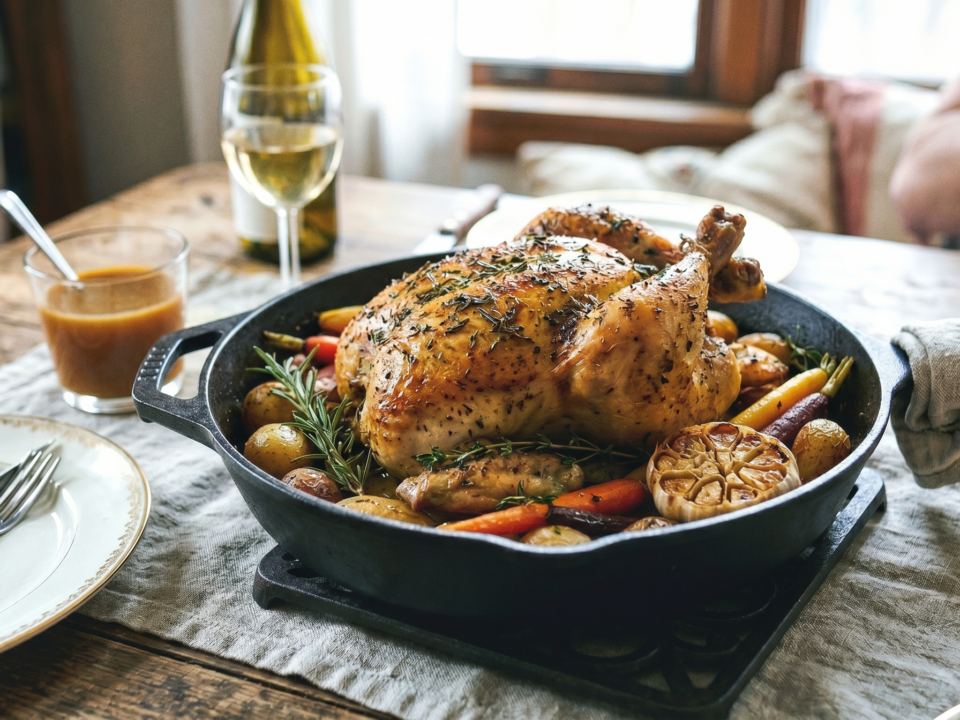
The “Sunday Best” Slow-Roasted Garlic & Herb Chicken
Slow-roast a 3½–4 lb chicken at 300°F for tender, nearly fall-apart breast meat and roast whole garlic until it’s spreadable—plus the single trick that keeps the skin crisp.
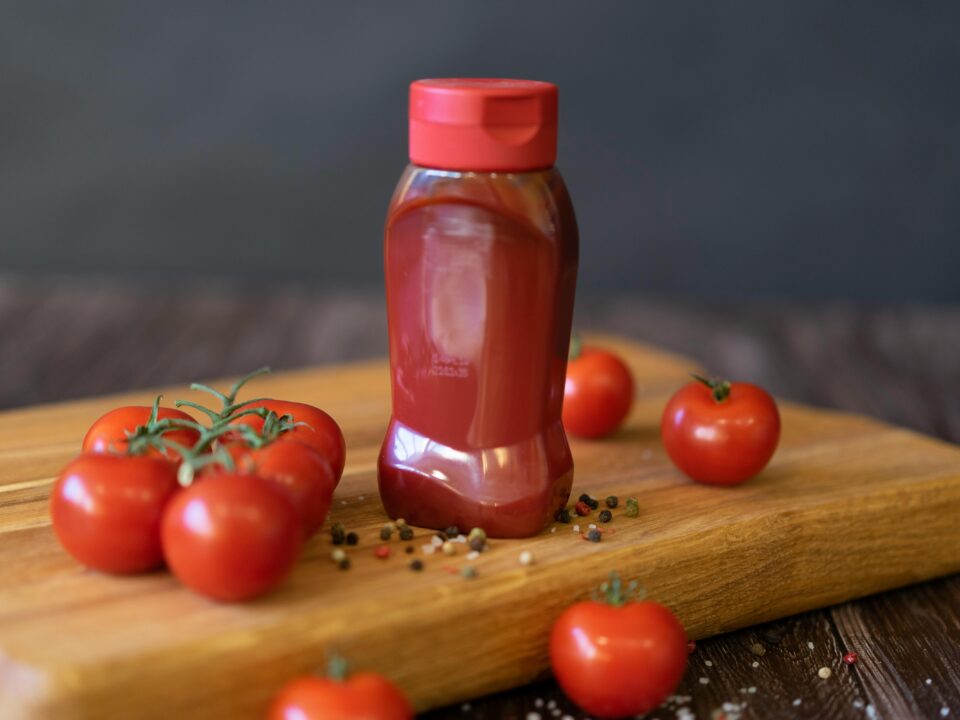
Sauce Tomate That Tastes Slow‑Cooked — in 45 Minutes
Cut through thin, acidic tomato sauce: sweat the onions low and long, toast the tomato paste, then simmer 30–40 minutes for rich, balanced sauce.

Thick, Tall Buttermilk Pancakes: How to Get Perfect Fluff Every Time
Two small technique changes—use buttermilk and mix as little as possible—give tall, tender pancakes with browned edges and a custardy interior in about 25 minutes.
Next in the journal
Jump to the next read without returning to the archive.