
The Real Reason Your Garlic Burns Before the Onions Are Done
It happens in almost every kitchen, and it usually happens in the first five minutes of making dinner....
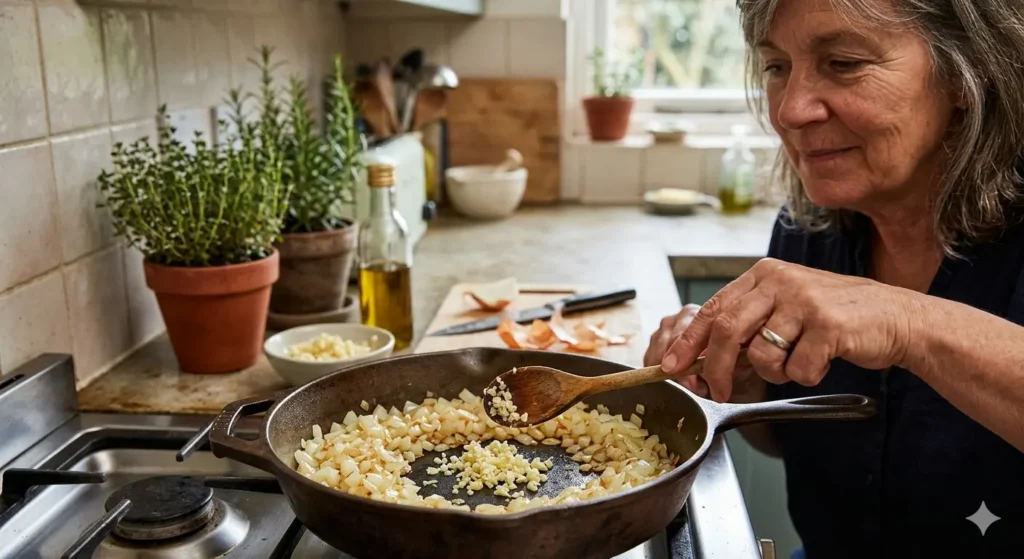
It happens in almost every kitchen, and it usually happens in the first five minutes of making dinner. You heat the oil, toss in your chopped onions, and because you want that incredible aroma, you drop the garlic in right alongside them. For a moment, it smells like a professional restaurant. Then, before the onions have even turned translucent, you notice those tiny white flecks of garlic are turning brown, then dark grey, and suddenly the air smells bitter instead of sweet. You try to scrape them off the bottom of the pan, but it is too late. The damage is done, and that bitter, acrid taste is going to follow your sauce or your sauté all the way to the dinner table. It is one of those small frustrations that can make a seasoned cook feel like a beginner, but the truth is that most recipes actually set us up to fail by listing garlic and onions in the same step.
What to know first
The most important thing to understand is that garlic and onions are not teammates when it comes to heat tolerance. They might come from the same botanical family, but they behave like completely different animals once they hit hot fat. Onions are sturdy, full of water, and thick-walled. They need time and significant heat to break down their cellular structure and release their sugars. Garlic, on the other hand, is delicate and contains very little water. When you chop garlic into tiny bits, you increase its surface area, making it incredibly vulnerable to the heat of the pan. Putting them in at the same time is like trying to roast a whole chicken and a tray of asparagus for the same amount of time; one will be raw while the other turns to ash.
Why this matters
This matters because garlic is the backbone of flavor in so many of our favorite comfort foods. When garlic is cooked correctly, it turns mellow, buttery, and sweet. When it burns, even slightly, it creates a chemical bitterness that no amount of salt, sugar, or cream can truly cover up. If you have ever made a spaghetti sauce or a stir-fry that tasted “off” or metallic despite following the recipe, a few burnt bits of garlic at the beginning are the likely culprit. Understanding the timing of these two ingredients is the simplest way to instantly upgrade the quality of almost every savory meal you cook for your family. It is a small adjustment that yields a massive difference in the final result.
The practical answer
