
The Real Reason Your Garlic Burns Before the Onions Are Done
It happens in almost every kitchen, and it usually happens in the first five minutes of making dinner....
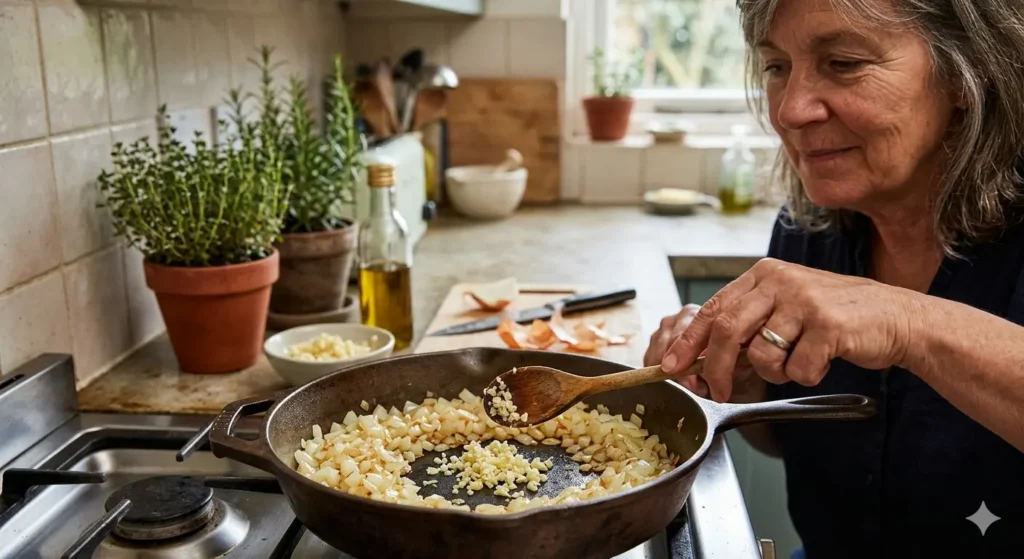
The practical fix is a rule of thumb I have lived by for years: garlic should almost always be the last thing into the pan and the first thing you drown with other ingredients. In professional circles, we call this aromatic timing, but for those of us at home, it just means giving the onions a massive head start. An onion usually needs five to seven minutes to soften properly. A tiny piece of minced garlic needs exactly thirty to sixty seconds to reach its peak flavor. If you wait until the onions are exactly where you want them before adding the garlic, you win every single time. You get the sweetness of the softened onion and the perfume of the garlic without the bitterness of scorched cloves.
Step-by-step guidance
Start by heating your pan over medium heat and adding your fat. Once the oil shimmers, add your onions. You want to hear a gentle sizzle, not a violent pop. Let those onions cook, stirring occasionally, until they are soft and starting to turn that beautiful golden color. This is your signal. Use your spoon to clear a small “hot spot” in the center of the pan, pushing the onions to the edges. Drop your minced garlic into that center spot. You will hear it sizzle immediately. Stir it constantly in that little circle for about forty-five seconds. As soon as the smell of garlic fills the kitchen and the pieces turn a pale gold—not brown—stir them into the onions and immediately add your next liquid or bulk ingredient, whether that is canned tomatoes, broth, or meat. This stops the garlic from cooking further and locks in that perfect flavor.
To continue, also see: Garlic Butter Chicken Rice and The “Secret Sauce” to Stress-Free Weeknights: Why Your Chicken Is Always Dry (and How to Fix It Forever).
Common mistakes
The biggest mistake is the “all-in-one” dump. We are often in a rush to get dinner on the table, so we chop everything on one board and scrape it all into the pan at once. Another common error is using a garlic press and then trying to sauté the results. A press turns garlic into a wet paste, which burns even faster than hand-minced garlic because the pieces are so microscopic. If you must use a press, you have to be even more careful with your timing. Lastly, many cooks keep the heat too high. If your oil is smoking, it is too hot for garlic. Garlic thrives in a warm environment, but it dies in a scorching one. Low and slow is always a safer bet for garlic than fast and furious.
Best tips for home cooks
If you find that you still struggle with timing, try slicing your garlic into thin “chips” rather than mincing it into tiny grains. Larger pieces take slightly longer to brown and give you a larger margin for error. Another trick is to mix your minced garlic with a teaspoon of olive oil in a small bowl before adding it to the pan. This coats the garlic and creates a tiny bit of a heat shield. Also, keep your next ingredient—like your splash of wine or your stock—ready and standing by. If you see the garlic turning dark too fast, pour in that liquid immediately. It will drop the temperature of the pan instantly and save the dish.
