
The “Secret Sauce” to Stress-Free Weeknights: Why Your Chicken Is Always Dry (and How to Fix It Forever)
Let’s be honest: We’ve all been there. It’s 6:15 PM on a Tuesday. You’re standing in your kitchen, staring at a pack of chicken breasts like they’re a math equation you can’t solve....
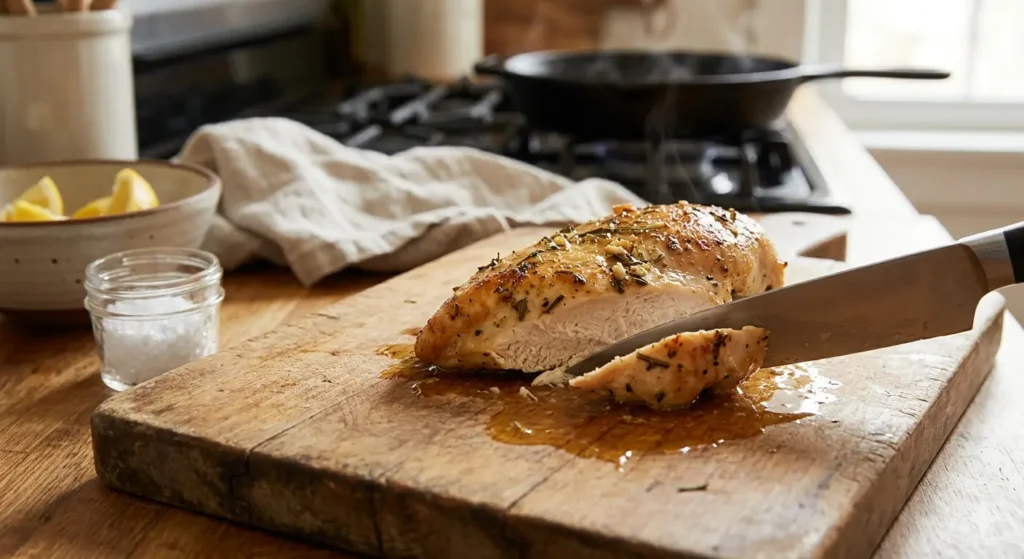
Let’s be honest: We’ve all been there. It’s 6:15 PM on a Tuesday. You’re standing in your kitchen, staring at a pack of chicken breasts like they’re a math equation you can’t solve. You want healthy, you want fast, but you’re dreading another meal of “cardboard chicken”—that sad, rubbery, flavorless protein we’ve all forced ourselves to swallow in the name of “eating clean.” I’ll admit it: For years, I was the Queen of Dry Chicken. I thought the only way to ensure it was “safe” was to cook it until it had the texture of an old sneaker. I’d drown it in store-bought ranch just to make it slide down. But then, I learned the one secret that changed my kitchen game forever. It wasn’t an expensive gadget or a culinary school degree. It was a simple shift in technique that turned my weeknight “meh” into “restaurant-quality” magic. If you’ve ever felt like a failure in the kitchen because your family reached for the takeout menus after tasting your dinner, this is for you. Let’s get you back in love with your stove. The “Rubber Chicken” Myth Most home cooks make the same mistake: The Fear of the Pink. Because we are (rightfully) terrified of undercooking poultry, we overcompensate. We blast it on high heat, leave it in too long, and walk away to fold laundry. By the time the timer dings, the fibers in the meat have tightened up so much they’ve squeezed out every drop of moisture.
No amount of bottled BBQ sauce can save a piece of meat that has lost its soul to the oven. 1. Stop Guessing, Start Measuring If you want to stop the madness today, go into your drawer and find that meat thermometer you got for a wedding gift and never used. The most important number in your kitchen isn’t the oven temperature; it’s 165°F (74°C). However, the real pro tip? Pull that chicken off the heat at 160°F. Residual heat—something we call carryover cooking—will finish the job while the meat rests. Pro Tip: If you wait until it hits 165°F on the stove, it’ll be 175°F by the time it hits your plate. That 10-degree difference is the gap between “juicy” and “jerky.” The 15-Minute Magic: The Power of the Brine If you have an extra 15 minutes while you’re chopping veggies, you have enough time to dry brine. Most people think brining requires a giant bucket of salt water and twelve hours of fridge space. Nope. Just sprinkle your chicken with salt and your favorite spices about 20 minutes before it hits the pan. The salt breaks down the tough muscle fibers and helps the meat hold onto its natural juices. It’s like a spa day for your dinner. When the heat hits, the chicken stays relaxed, plump, and—most importantly—tender. Why “Medium-High” Is Your Enemy We’re all in a rush. I get it. You want the pan screaming hot so the food cooks faster.
