
Essential Guide to Selecting and Maintaining Kitchen Knives for Home Cooks
Every home cook needs a reliable set of tools to prepare meals efficiently and safely. Among all kitchen equipment, the chef knife is arguably the most important....
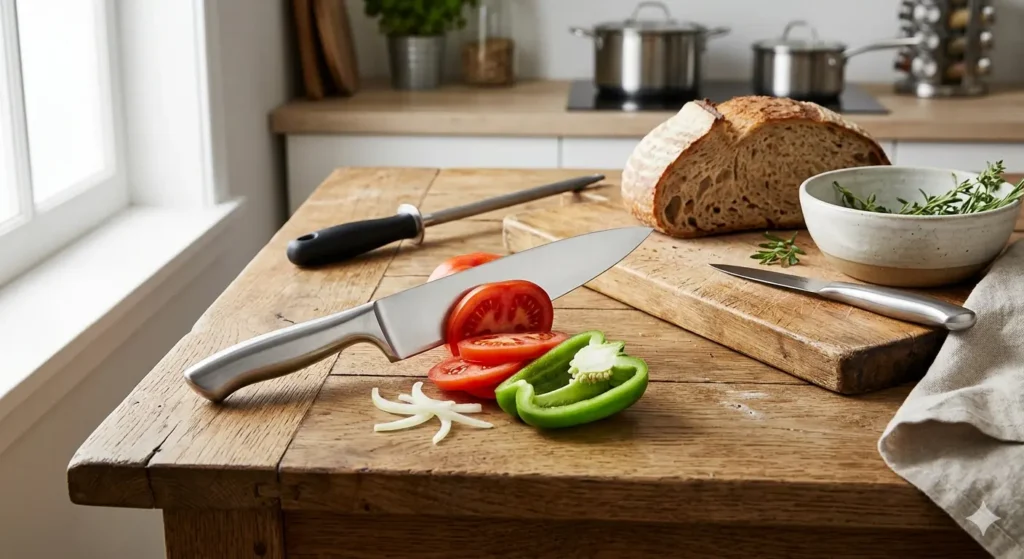
Every home cook needs a reliable set of tools to prepare meals efficiently and safely. Among all kitchen equipment, the chef knife is arguably the most important. Using the right knife not only makes chopping vegetables and slicing proteins faster but also reduces the risk of slips and injuries. Understanding the basics of knife selection and care can transform your daily cooking experience. Choosing the Right Knife for the Task While professional sets often include dozens of pieces, most home kitchens only require three essential knives. The chef knife, usually eight inches long, is the primary tool for chopping, slicing, and dicing. The serrated bread knife is necessary for cutting through crusty loaves or delicate tomatoes without crushing them. Finally, a small paring knife is ideal for peeling fruit or performing intricate tasks like removing seeds. To continue, also see: Perfectly Chewy Chocolate Chip Cookies with Crispy Edges and How to Store Fresh Herbs So They Last Longer.
When shopping for a new knife, focus on the balance and the grip. A knife should feel comfortable in your hand and not feel too heavy toward the blade or the handle. High-carbon stainless steel is a popular choice for many because it maintains a sharp edge while resisting rust and stains. The Importance of a Sharp Blade A dull knife is actually more dangerous than a sharp one. When a blade is dull, you must apply more pressure to cut through food. This increased force makes the knife more likely to slip off a round onion or a tough sweet potato, leading to accidents. You can maintain your knives at home using a honing steel. Honing does not remove metal from the blade but instead realigns the microscopic teeth along the edge. For actual sharpening, which involves grinding the metal to create a new edge, you may use a whetstone or visit a professional sharpening service once or twice a year depending on how often you cook.
