
Tell Me What You Eat and I Will Tell You How You Feel
We have all had those mornings where we wake up feeling like we are moving through molasses—heavy, slow, and slightly irritable for no apparent reason....
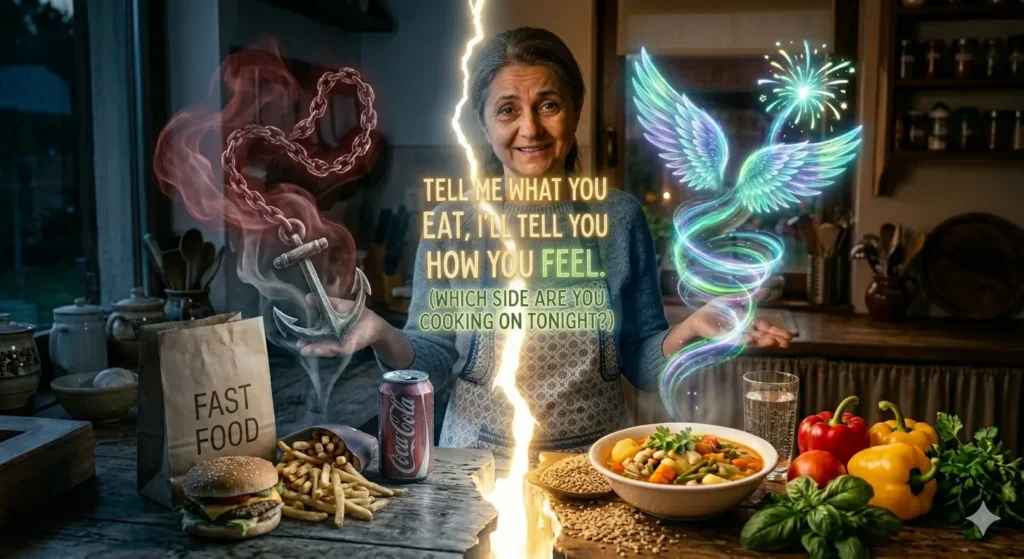
We have all had those mornings where we wake up feeling like we are moving through molasses—heavy, slow, and slightly irritable for no apparent reason. Often, we chalk it up to a poor night’s sleep or the inevitable passage of time once we cross the forty-year mark. But if you look back at your dinner plate from the night before, or your lunch the day before that, the mystery usually begins to unravel. There is an old saying that the kitchen is the heart of the home, but for those of us who have spent decades tending to the stove, we know the kitchen is actually the control center for our entire well-being. What we choose to put in the pot doesn’t just fill our stomachs; it dictates the clarity of our thoughts, the ache in our joints, and the steady beat of our energy throughout the day. This is about learning to listen to the quiet signals your body sends after a meal, turning your kitchen into a place of restoration rather than just a place of chores. To continue, also see: Creamy Tomato Spinach Pasta and What Happens to Your Body When You Eat Fast Food Every Day?. What to know first The connection between food and mood isn’t about magic; it’s about chemistry. After 40, our bodies become much more sensitive to the quality of the “fuel” we provide. When we eat, our digestive system breaks down food into molecules that enter the bloodstream and eventually influence the brain and nervous system.
If we eat highly processed foods, we are essentially sending “noisy” signals to our body, causing spikes in blood sugar and inflammatory responses. Conversely, whole foods send “clear” signals that promote stability. Understanding this connection is the first step toward reclaiming your vitality. It is not about a restrictive diet; it is about recognizing that every ingredient you use has a direct consequence on how you will feel three hours later. Why this matters By the time we reach our 40s and 50s, we can no longer “bounce back” from a week of poor eating the way we did in our 20s. The cumulative effect of what we eat begins to show up in our daily mood and physical comfort. If you are constantly feeling “hangry” (hungry and angry), experiencing afternoon slumps that require a third cup of coffee, or feeling puffed up and bloated, your kitchen habits are likely the culprit. This matters because your quality of life is tied to these energy levels. When you eat for steady energy, you are more patient with your family, more productive at work, and more likely to have the stamina for the hobbies you love. You aren’t just eating to live; you are eating to feel alive. The practical answer The most effective way to shift how you feel is to focus on stabilization. Our bodies crave a steady hum of energy, not a series of crashes. To achieve this, the practical answer is the “Power of Three”: every meal should contain a clean protein, a healthy fat, and a fiber-rich vegetable.
