Tell Me What You Eat and I Will Tell You How You Feel
We have all had those mornings where we wake up feeling like we are moving through molasses—heavy, slow, and slightly irritable for no apparent reason....
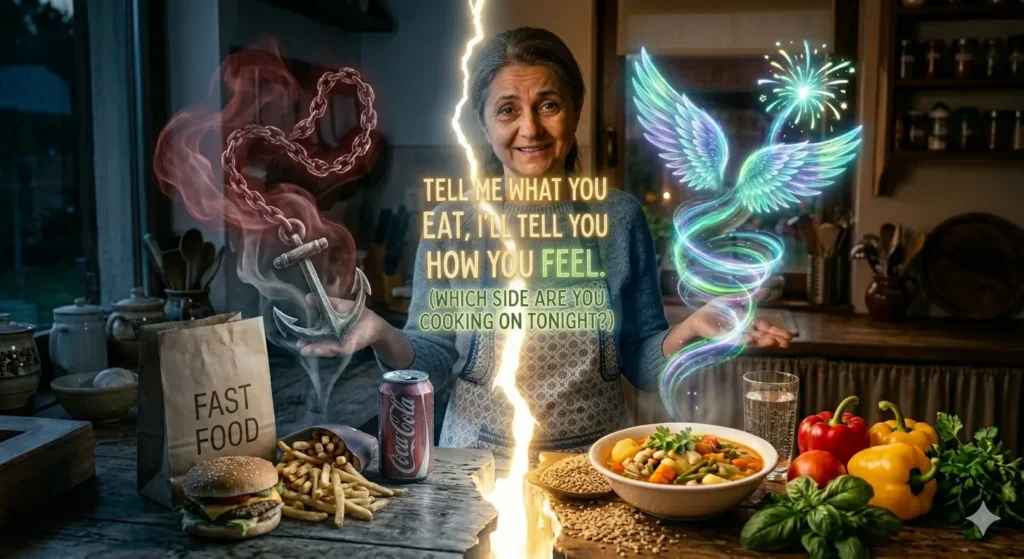
The “Ten-Minute Prep”: Never start cooking when you are already starving. Keep a bowl of olives or some raw walnuts on the counter. A tiny bit of healthy fat while you chop vegetables prevents you from snacking on crackers or bread while the main meal is being prepared. Fermented Friends: Incorporate a spoonful of sauerkraut or a glass of kefir into your daily routine. A healthy gut is directly linked to a happy brain. When your digestion is on track, your mood follows suit. When to use this advice This advice is most potent when you are entering a busy season of life—perhaps you are juggling work, aging parents, and growing children. It is also vital during seasonal changes when our immune systems are taxed. Use these principles when you feel your “spark” starting to dim. You don’t need a medical intervention to feel better; you often just need a week of honest, clean, stabilized cooking to reset your internal compass. FAQ: Q: Can food really help with my afternoon brain fog? A: Absolutely. Brain fog is often the result of a “carb-heavy” lunch. When you eat a big sandwich or a bowl of pasta, your body spends all its energy on digestion, leaving the brain in the dark. Switching to a salad with protein will keep your mind sharp until dinner. Q: Is it expensive to eat this way? A: It is often cheaper. Cabbage, carrots, lentils, and eggs are some of the most budget-friendly ingredients available and are the foundation of “feeling good” food.
You save money by skipping expensive packaged snacks and sodas. Q: Do I have to give up my favorite comfort foods forever? A: Not at all. The goal is the 80/20 rule. If you eat food that makes you feel great 80% of the time, your body can easily handle a celebration meal or a treat the other 20% of the time without a total collapse in energy. Q: Why do I feel tired even after eating a “healthy” fruit smoothie? A: Fruit is healthy, but in a smoothie, the sugar is released very quickly. If you don’t add a source of fat or protein (like flax seeds or almond butter), you’ll get a sugar spike and a subsequent nap-inducing crash. Conclusion: The kitchen is more than a place where we prepare fuel; it is the place where we determine the quality of our days. By paying attention to the connection between what we eat and how we feel, we move from being passive consumers to active caretakers of our own vitality. At 40 and beyond, we have the wisdom to know that a meal isn’t just a moment on the tongue—it’s the foundation for our next 24 hours. Start small, listen to your body’s quiet whispers, and let your cooking be the best medicine you ever take. You deserve to feel as good as the food you make.