
Essential Guide to Selecting and Maintaining Kitchen Knives for Home Cooks
Every home cook needs a reliable set of tools to prepare meals efficiently and safely. Among all kitchen equipment, the chef knife is arguably the most important....
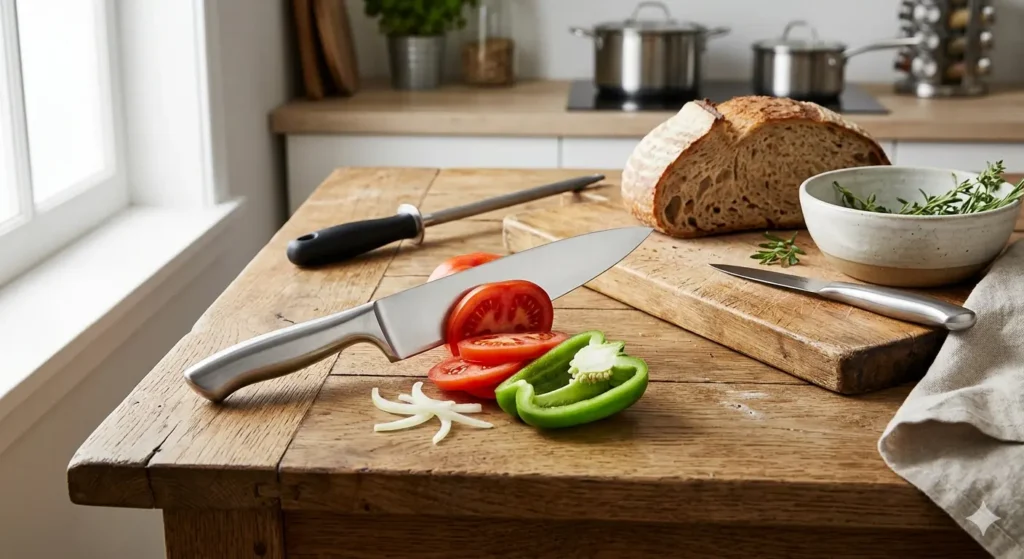
Proper Cleaning and Storage Techniques To extend the life of your kitchen tools, avoid the dishwasher. The high heat, harsh detergents, and the banging against other dishes can dull the blade and crack wooden handles. Instead, wash your knives by hand with warm soapy water immediately after use and dry them with a clean towel. Storage is also key to safety and maintenance. Storing knives loose in a kitchen drawer allows the blades to rub against each other, causing nicks and dullness. Use a magnetic knife strip, a wooden knife block, or individual blade guards to keep the edges protected and out of reach of children. Cutting Board Materials The surface you cut on is just as important as the knife itself. Wood and plastic are the best materials for your blades. Avoid cutting on glass, marble, or ceramic surfaces. These materials are much harder than the steel of your knife and will cause the edge to roll or chip almost instantly.
Related Recipe Ideas to Practice Your Skills Once you have a sharp, reliable knife, you can practice your technique on a variety of dishes. A classic vegetable minestrone soup is an excellent way to practice consistent dicing of carrots, celery, and zucchini. For those looking to improve their slicing skills, a fresh caprese salad requires thin, even slices of tomatoes and mozzarella. If you want to work on fine mincing, preparing a fresh garlic and herb chimichurri sauce for grilled proteins is a great exercise in precision and control.