
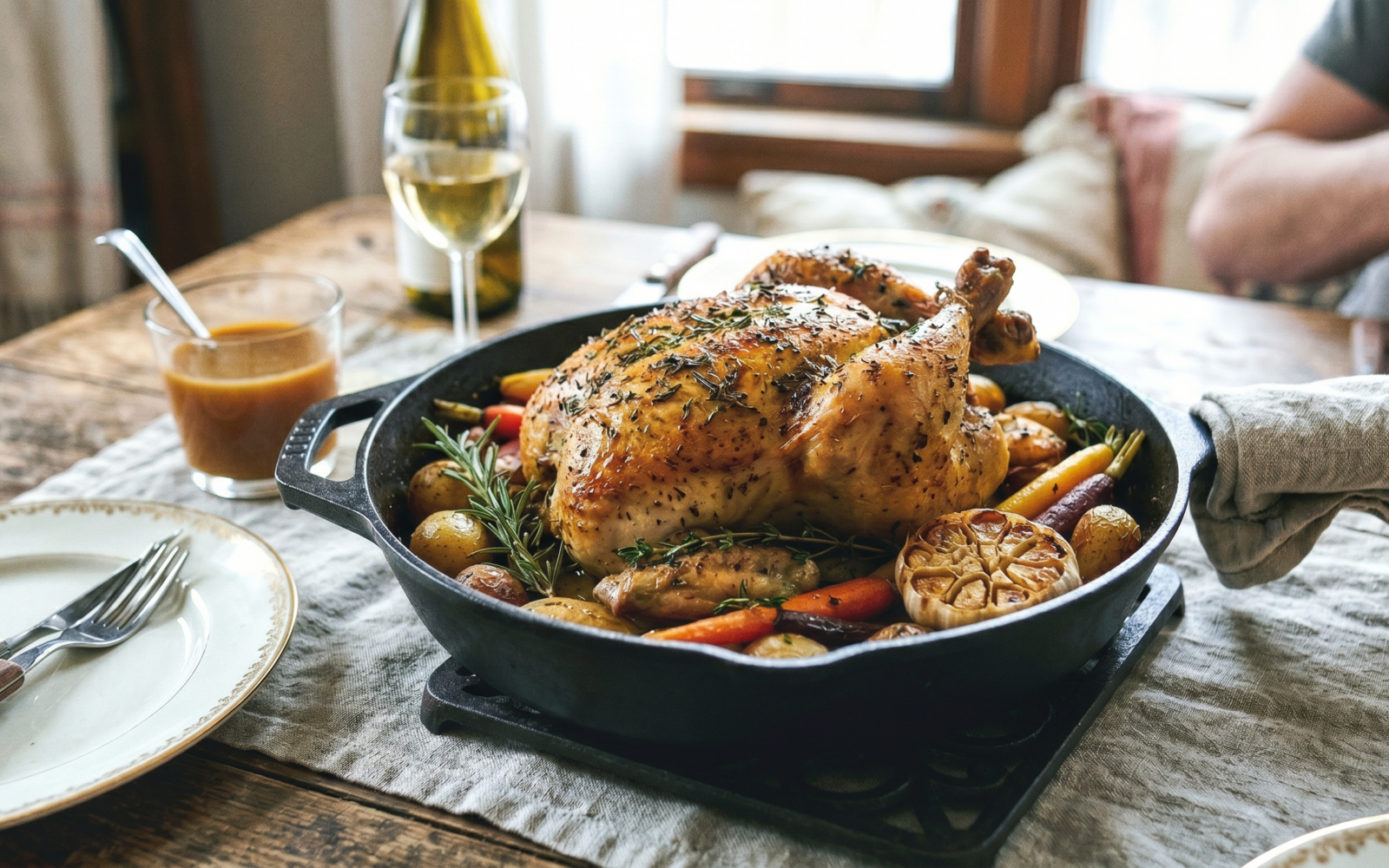
The “Sunday Best” Slow-Roasted Garlic & Herb Chicken
Slow-roast a 3½–4 lb chicken at 300°F for tender, nearly fall-apart breast meat and roast whole garlic until it’s spreadable—plus the single trick that keeps the skin crisp.
On this page
Practical cooking method
We’ve split the method into three clear phases—prep, low-and-slow roast, and hot finish—so you can follow along without guessing temperatures or times.
- Prep (20–30 minutes active): Pat the chicken thoroughly dry with paper towels. Gently separate the breast skin from the meat with your fingers. Mix 4 tbsp softened butter with 3–4 minced garlic cloves, 1 tbsp chopped thyme, 1 tsp lemon zest and ½ tsp black pepper; smear most under the breast skin and the rest over the exterior. Salt the skin and cavity (1 to 1½ tsp kosher salt for a 3½–4 lb bird). Tuck the legs or tie with kitchen twine if you prefer an even profile for roasting.
- Low-and-slow roast (75–95 minutes for 3½–4 lb): Preheat oven to 300°F. Place the chicken on a rack set in a roasting pan; nestle two prepared garlic heads (tops sliced, drizzled with oil, wrapped loosely in foil if they’re browning too fast) alongside. Roast until the thickest part of the thigh reaches about 155–160°F (or roughly 75–95 minutes depending on size). Use an instant-read thermometer for accuracy—oven times vary.
- Hot finish (8–15 minutes): Increase oven to 450–475°F and roast until skin is deeply browned and crisp, and the breast thermometer reads 160–162°F. Alternatively, slide the bird under a hot broiler for 3–6 minutes—watch closely to avoid burning. Rest the chicken tented loosely with foil for 15–20 minutes to allow juices to redistribute and the internal temperature to reach a safe 165°F.
On the garlic: when the heads are golden and the cloves yield when pressed, they’re done. Squeeze the soft cloves into a bowl and stir with a little salt and olive oil for a quick condiment.
Quick troubleshooting: if the skin is browning too fast during the low roast, loosely tent with foil and proceed; resume the hot finish uncovered.
For a deeper dive on timing with slow-roasting vegetables and why onions sometimes need extra patience, read: Why Onions Need More Time Than Most Recipes Admit.
Keep reading
More from Recipes, selected to keep the flow going.
Sauce Tomate That Tastes Slow‑Cooked — in 45 Minutes
Cut through thin, acidic tomato sauce: sweat the onions low and long, toast the tomato paste, then simmer 30–40 minutes for rich, balanced sauce.

Thick, Tall Buttermilk Pancakes: How to Get Perfect Fluff Every Time
Two small technique changes—use buttermilk and mix as little as possible—give tall, tender pancakes with browned edges and a custardy interior in about 25 minutes.
Pizza Fromage: The Cheese-Forward Method for Ultra-Melt and Crackly Crust
Two decisions unlock a premium pizza fromage: a long cold ferment and a bold cheese blend that melts perfectly without pooling.
Next in the journal
Jump to the next read without returning to the archive.